Introducing LAWSMORE AI Governance Toolkit

Two months ago, a client shared a troubling experience. Her organisation had adopted several AI tools to improve operations. Marketing generated visuals with AI. HR screened candidates with automated systems. Legal staff drafted documents with AI assistance. At first, productivity increased, but problems soon emerged. A contract draft contained clauses no one had approved. Confidential client information was entered into a public AI platform. Marketing visuals unintentionally mirrored copyrighted material.

She reflected, “We adopted AI without a governance framework.”

This scenario is increasingly common. Across Ghana and Africa, organisations adopt AI at remarkable speed, but without structures to guide its use. Decisions are influenced by machine outputs. Staff experiment with tools without oversight. Regulatory expectations are evolving, and legal risks are rising. Organisations without proper governance face operational failures, reputational harm, and potential legal exposure.

This challenge inspired the development of the LAWSMORE AI Governance Toolkit, a comprehensive resource designed to help organisations adopt AI responsibly, safely, and in compliance with law. These tools are suitable for any sector: startups, schools, NGOs, consultancies, media houses, public agencies, and businesses.

The Toolkit and Its Components

The LAWSMORE AI Governance Toolkit consists of practical resources, each addressing a critical area of AI adoption:

  1. AI Governance Policy: A structured framework defining organisational principles, responsibilities, operational controls, and regulatory compliance requirements. It ensures AI use aligns with ethical standards and legal obligations.
  2. AI Risk Assessment Template (AIRA): A structured tool to evaluate the risk level of every AI system. Organisations can classify AI tools as low, medium, high, or critical risk, and develop mitigation strategies. AIRA provides transparency, accountability, and evidence of due diligence.
  3. Vendor and Third-Party Management Template: Template to assess AI vendors’ technical, operational, and legal reliability. They ensure third-party solutions meet organisational and regulatory standards before onboarding.
  4. AI Impact Assessment Template (AIIA): A pre-deployment assessment tool that evaluates AI system benefits, risks, safeguards, and compliance obligations. It ensures informed decision-making before AI is implemented.
  5. Staff AI Usage Declaration and Tools Register: A mechanism to record AI tools staff are using, their purposes, and approval status. It enhances organisational visibility and prevents accidental misuse of sensitive information.

Why These Tools Are Important

AI is transforming the way organisations operate. Systems now assist with drafting reports, analysing data, screening candidates, providing client services, and more. Legal, operational, and reputational risks arise when AI is used without governance. Regulators worldwide are increasingly demanding documentation, oversight, and human accountability. The LAWSMORE AI Governance Toolkit equips organisations to meet these expectations while fostering innovation.

Institutions that implement these tools will gain structured governance, protect sensitive information, reduce risk exposure, and build trust with stakeholders. They will create a culture where AI amplifies human decision-making rather than replacing it, and where innovation is balanced with responsibility.

A Call to Action

African organisations have a historic opportunity. AI adoption is accelerating across sectors, and the institutions that govern it responsibly will shape the future. The LAWSMORE AI Governance Toolkit is ready for organisations seeking practical guidance, clear processes, and legally grounded tools.

Organisations can access the Toolkit and training to implement its components, establish accountability, and protect themselves from the emerging risks of AI. The future belongs to those who combine innovation with responsibility.
AI Governance for Beginners: What Every Workplace Must Put in Place Now

In our previous newsletter, we warned that one AI mistake can cost an employee their job. Today, we want us to confront the deeper problem behind that reality: many organisations simply have no governance structure for AI use. Leadership teams assume AI is still a novelty, something junior staff play with on the side. But the truth is different. AI is already in every office, from drafting emails to reviewing contracts, and ungoverned AI use is quietly creating legal and professional risks that are no longer theoretical.

According to Using Generative AI: Key Legal Issues, published by Practical Law on 1 November 2025, generative AI has already become a source of professional misconduct in multiple jurisdictions (Reuters, 2025). Companies are using AI for legal drafting, commercial negotiations, HR decisions, compliance work, and public-facing communication without the necessary safeguards. At LAWSMORE, we see this every week when young lawyers and corporate teams reach out after something “small” goes wrong.

AI governance matters now because the absence of rules is itself a rule. It invites carelessness, exposes organisations to liability, and creates an environment where even the most well-meaning staff can unintentionally cause damage. The good news is that governance does not have to be complicated. Every workplace, whether a law firm, a bank, an NGO, or a school, can begin with three foundational structures we employ at LAWSMORE to train our clients.

1. AI Verification Protocols

Generative AI can produce output that looks real and sounds authoritative but is entirely false. A 25 July 2025 paper titled Research on Security Risks and Supervision of Generative AI Systems found that the risk of inaccurate or misleading output remains significant, even in advanced models (ACM Digital Library, 2025). At LAWSMORE, we teach users to treat every AI output as “untrusted until verified.” Proper verification means:

  • checking facts against reliable sources
  • confirming citations
  • requiring human review before anything is shared or published
  • ensuring AI drafts remain drafts, not final work

Skipping these steps is not efficiency. It is hidden liability.

2. AI Confidentiality Rules

Confidentiality is the most ignored AI risk. A Legal Practice blog from 31 October 2025 warned that free public AI tools cannot guarantee protection of sensitive data, and even flagged lawyers who unknowingly exposed client information while using them for research (Legal Solutions, 2025). To stay safe, organisations must:

  • prohibit staff from pasting sensitive data into public AI tools
  • anonymise all inputs
  • rely on enterprise or private AI deployments
  • train teams on data sensitivity and privacy obligations

Once confidential data enters an AI system, the responsibility belongs to the organisation, not the AI company.

3. AI Governance Policy

A simple written policy can be the difference between safety and organisational disaster. Research published on arXiv in 2025 shows that accountability in AI use depends on governance structures, not good intentions.

A strong AI governance policy must answer LAWSMORE‘s six key questions built around the 5Ws and H:

  1. What AI tools are allowed?
  2. Who can use them, and who must review AI-generated work?
  3. When must AI use be disclosed?
  4. Where is AI-generated content stored and protected?
  5. Why is the organisation using AI, and what risks is it avoiding?
  6. How are AI outputs verified, corrected, logged, and approved?

Any organisation that cannot answer these six questions is operating with blind spots that will eventually become liabilities.

The Stakes Are Rising

Regulators are no longer patient. On 7 June 2025, a UK judge warned that lawyers who submit AI-generated fake cases could face contempt of court (AP News, 2025). Similar warnings are emerging in Australia, the United States, and Canada.

The legal world is shifting from reaction to prevention. AI governance is no longer optional. It is a legal necessity.

The Path Forward

AI is not the enemy. The real threat is using it without rules. If we want to benefit from AI in our offices, courtrooms, and institutions, we must create structures that keep us safe. Verification protocols protect truth. Confidentiality rules protect people. Governance policies protect organisations.

Those who act now will lead the future with confidence. Those who delay will be shaped by risks they did not see coming. AI is already here. Responsibility must follow.

LAWSMORE is ready to guide your organisation through safe AI adoption. Contact us to begin.

What You Need to Know About GIZ Ghana’s AI Practitioners’ Guide

I honestly wish I could say that the dangers of artificial intelligence spillovers are distant realities. But that would be untrue.

Unlike my friend Sussana Mensah-Nelson , who commented on last week’s edition of The Future of Law & AI, saying she thinks “we are right where we need to be, not earlier or later,” I believe we are far behind when it comes to AI governance. Shouldn’t safeguards come before inventions?

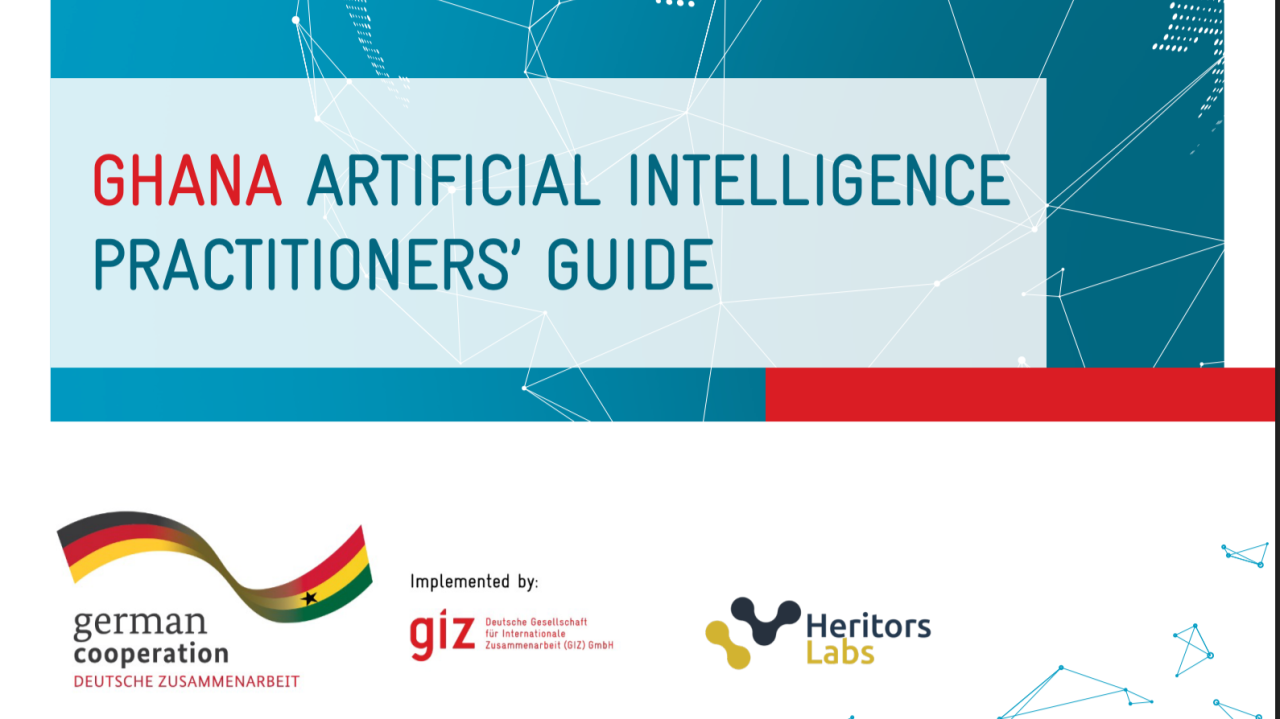
Nevertheless, we are not so lost in our journey toward an interconnected AI world that we cannot recover. The Ghana Artificial Intelligence Practitioners’ Guide (2025), developed by Heritors Labs Ltd. in collaboration with GIZ Ghana, marks a turning point, at least for Ghana and other similar jurisdictions. It is the country’s first national framework for building an AI ecosystem rooted in ethics, inclusivity, and accountability.

At first, I thought it was just another policy paper. But after reading it, I realized it is much more. It is a national call to action and a vision of how Ghana can lead Africa in developing technology that serves people, not power. The Guide insists that AI must reflect our national values of fairness, collaboration, and community.

At its core, the Guide outlines seven key pillars for responsible AI development:

  1. Ethical and Legal Governance: ensuring fairness, transparency, and accountability.
  2. Development and Deployment: building AI that solves Ghanaian problems using local data.
  3. Sector-Specific Applications: transforming agriculture, healthcare, energy, and education.
  4. Capacity Building: preparing Ghanaians to understand and question AI.
  5. Innovation and Entrepreneurship: supporting startups and youth-led innovation.
  6. Sustainability and Inclusion: ensuring women, rural communities, and persons with disabilities are part of Ghana’s AI future.
  7. AI for Development: using technology to enhance, not replace, human decision-making.

These are undoubtedly forward-looking pillars for responsible AI advancement. However, for AI governance advocates like myself, the Guide also raises serious concerns. Without coordination, Ghana’s AI ecosystem could become fragmented. And without binding laws, investors and creators may prioritize profits over safeguards.

This is why there is a clear need for a National AI Commission and for Parliament of Ghana to set standards, codify AI rules, and ensure compliance.

After reading this, I believe you will agree that AI cannot be left to chance or technology alone. It requires law, strong institutions, and human oversight.

For lawyers, policymakers, and innovators, this is a pivotal moment. Ghana is no longer waiting to catch up; it is leading with purpose. The task ahead is to ensure that every algorithm, every innovation, and every digital policy reflects our shared commitment to justice and human dignity.

AI is not the future. It is our present. What matters now is whether Ghana will shape it or be shaped by it. I honestly wish I could say that the dangers of artificial intelligence spillovers are distant realities.

Download Guide: Ghana Artificial Intelligence Practitioners’ Guide (2025)

Your next AI error could cost you your job

You are using AI at work. Lawyers use it to summarise cases. Students use it for assignments. Companies use it to draft emails, proposals, contracts, HR letters, and compliance documents. But very few people stop to ask the real question: What happens when the AI gets it wrong?

This is the single biggest problem emerging from the Reuters Practical Law analysis on generative AI in professional settings. And the truth is uncomfortable. Generative AI is not just helping us work faster. It is quietly creating a new category of legal and professional risk that neither you nor companies are prepared for.

…your next AI error could cost you your job

AI Creates Errors That Look Real, and You Are Liable for Them

Most people assume AI tools are “assistants.” But when you copy AI output into real work, it becomes your work. If the AI invents a case, misquotes a regulation, plagiarises someone’s writing, includes confidential data, or exposes a client’s information, it becomes your mistake.

Reuters highlights four high-risk areas now showing up in real cases:

  • Confidentiality breaches: Employees have pasted sensitive data, client documents, and private emails into AI tools without realising these systems store prompt-based information for training or auditing.
  • Hallucinated legal authorities: Courts in the US, Australia, and the UK have already sanctioned lawyers for filing AI-generated cases that never existed.
  • Copyright violations: Some AI-generated text or images may contain protected material. Anyone who uses it commercially becomes legally responsible.
  • Bias and discrimination: AI-generated recruitment shortlists and HR decisions are already being tested under anti-discrimination laws.

These risks fall directly on the user and the organisation, not on the AI company.

What This Means for the Everyday Professional

If you use AI without legal guardrails, you are exposing your employer, your clients, and yourself to a risk you cannot see. The problem is not using AI. The problem is using it blindly.

This is why responsible governance matters. Without rules for verification, confidentiality, and documentation, employees will continue to make mistakes that look small but have catastrophic professional consequences.

How to Fix the Problem

To protect yourself or your organisation, you need three things:

  1. AI Verification Protocols: Establish verification protocols within your organisation, and always verify facts, cases, quotes, statistics, and legal reasoning that come from AI. Treat every AI output as “untrusted until proven.”
  2. AI Confidentiality Rules: Do not paste client information, student data, internal documents, or identifiable details into public AI tools.
  3. AI Governance Policy: Every organisation should have clear guidance on what AI tools employees may use, when verification is mandatory, who is accountable for errors, and how AI-generated content must be disclosed.

Without this, firms and institutions are walking into liabilities with no safety net.

Why Lawyers Should Care the Most

Generative AI is forcing a shift in professional responsibility. The legal industry has never had to regulate tools that sound human while producing errors at scale. This is why AI governance is no longer optional. It is a legal necessity.

If you rely on AI at work, the question is no longer whether it will make your job easier. The question is whether you understand the risks well enough to protect yourself.

AI is here. The law is catching up. Now we must learn how to work safely before we create problems the courts cannot fix.

Chief Justice Nominee Proposes Using AI to Empanel Supreme Court Judges to Reduce Bias

On the 10th of November 2025, something historic happened in the Parliament of Ghana. During his vetting, Ghana’s Chief Justice nominee, Justice Paul Baffoe-Bonnie, openly suggested that the Supreme Court could use Artificial Intelligence to randomly empanel judges for cases. Whether you agree with him or not, this proposal marks the beginning of a new national conversation about trust, transparency, and the future of judicial administration.

He did not claim expertise in AI. In fact, he admitted he was relying on people he trusts who told him such systems already exist. But what mattered was the underlying idea. Ghana’s judicial system is finally asking whether AI can reduce perceptions of bias and restore public confidence.

Let us break down what is at stake.

The Current Empaneling System in Ghana

Under Article 128(2) of the 1992 Constitution of Ghana, the Supreme Court must sit with a minimum of five Justices. In practice, the Chief Justice exercises broad discretion in selecting which Justices sit on which cases. Seniority often guides the process, but there is no codified statutory procedure. In sensitive political cases, this discretion has been criticised by academics and litigants who fear “panel-packing” or selective composition for desired outcomes.

A 2010 analysis noted that discretionary panel formation can create an appearance of bias even when no actual bias exists. The recently outgone Chief Justice, Justice Gertrude Torkornoo, faced strong public criticism over perceived bias in the way Supreme Court panels were empanelled. The outcomes of these panels led to the nickname “Unanimous FC” during her tenure and became part of the broader public conversation about transparency and trust in judicial decision-making.

During his vetting, Justice Baffoe-Bonnie also referenced past cases where concerns over panel composition created public anxiety. This has made trust in the system fragile, and it is this problem he is seeking to solve.

How Other Jurisdictions Do It

Many people assume that advanced jurisdictions have perfected this process. They have not.

In the United States federal courts, there is a popular belief that three-judge panels are randomly assigned. But research from Duke Law and Cornell Law School shows that several circuits did not follow genuinely random assignment. The assumption of neutrality was not always matched by reality.

In March 2024, the U.S. judiciary even encouraged courts to adopt stronger policies to reduce ‘judge shopping’. This means that bias concerns are not only a Ghana problem, but a universal problem. This global context makes Ghana’s current debate more timely.

The AI Innovations Proposed by Paul Baffoe-Bonnie

Paul Baffoe-Bonnie introduced several reformation proposals for Ghana’s Supreme Court. Amongst these included:

  1. Using AI for Panel Assignment: He suggested deploying an AI system to randomly empanel judges. He told Parliament: “We should be able to consider empanelling an AI panel of judges. AI will be a very good thing for empanelling.” The idea is to enhance fairness and transparency by using algorithmic randomisation instead of purely human discretion.
  2. Over-Assignment to Allow for Judge Availability Issues: Recognising real world constraints, he proposed that the AI might assign more judges than strictly needed to a panel, so that if one judge withdraws at short notice (due to illness or emergency), the panel remains intact and whistle-blowing on bias is reduced. This is a practical solution to the unpredictability of human availability.
  3. Benchmarking Against Bias in Current System: He juxtaposed the AI approach with Ghana’s current system, where seniority and human discretion govern panel selection. His point is that the current system “raises questions of bias and favouritism,” and a transparent AI mechanism could restore trust.
  4. Procedural Reform Tied to AI: In his response, he also promised broader rule-reform: updating outdated procedural rules (for example rules requiring personal service despite electronic options) so that the courts are not only fairer but faster. The AI proposal was, therefore, part of a bigger modernisation agenda.

Key Takeaways and Risks

  • Moving to AI-based paneling is ambitious for Ghana, and it could lead to greater impartiality provided governance, auditing, and transparency are embedded.
  • It addresses core concerns: bias, panel-packing, public trust, and disproportionate discretion.
  • However, it raises new challenges: algorithmic transparency, data fairness, audit trails, and how to handle exceptions such as system error.
  • Implementation will require governance safeguards: who programmes the AI, how its outcomes are audited, how randomness is verified, and how human recourse is maintained.

Why This Matter for Ghana and Africa

Ghana’s Supreme Court navigating AI‐assisted paneling could set a precedent for the continent. Instead of importing systems from developed jurisdictions, Ghana has a chance to design a home‐grown hybrid: algorithmic assignment infused with African legal traditions of fairness, community involvement, and oversight. The time to shape this future is now.

Empowering Citizens: The Role of Legal Literacy in the AI Era

Understanding Legal Literacy

Legal literacy refers to the knowledge and awareness of legal rights and responsibilities. It empowers citizens to navigate their legal systems more effectively, ensuring they can protect their interests and assert their rights. As technology evolves, and particularly with the rise of artificial intelligence (AI), understanding legal principles has never been more critical.

The Importance of Legal Literacy Today

As we integrate AI into different facets of life, from businesses to governance, the law must adapt. Here are some reasons why legal literacy is crucial:

  • Empowerment: Knowledge of legal rights enables individuals to stand up against injustices.
  • Informed Decision-Making: Understanding the law helps citizens make better personal and professional decisions.
  • Active Participation: A legally literate populace can engage in civic duties, advocate for their needs, and contribute to policymaking.
  • AI Ethics and Governance: With the rise of AI, citizens must grasp the associated legal implications concerning privacy, data security, and accountability.

AI and the Future of Law

The relationship between AI and law is complex and evolving. Here are key areas where AI intersects with legal practices:

  • Contract Review: AI tools can analyze contracts quickly, highlighting potential risks and helping individuals and businesses negotiate better.
  • Legal Research: Automated systems simplify the process of finding relevant case law and regulations, making legal resources more accessible.
  • Predictive Analytics: AI can aid in predicting litigation outcomes based on historical data, assisting attorneys in strategy development.
  • Compliance Monitoring: Companies can use AI to ensure they adhere to regulations and laws, reducing the risk of legal disputes.

Bridging the Gap: Initiatives to Enhance Legal Literacy

LAWSMORE is committed to fostering legal literacy through various initiatives:

  • Legal Awareness Campaigns: Creating informative resources that simplify legal concepts for everyone.
  • Youth-Focused Education: Designing programs tailored for young individuals to empower them with legal knowledge.
  • AI Governance Insights: Providing thought leadership on ethical AI practices and their legal frameworks.
  • Community Workshops: Hosting events that encourage dialogue and engagement between legal experts and community members.

Conclusion

In an age where technology rapidly changes our lives, legal literacy becomes essential for maintaining a fair and just society. By understanding our rights and responsibilities, we can navigate the complexities of law, particularly as it intersects with AI. Through education and advocacy, organizations like LAWSMORE are playing a vital role in crafting a future where legal knowledge empowers all citizens—helping us protect our rights and shape the evolving landscape of justice.

Empowering Citizens: The Role of Legal Literacy in an AI-Driven World

Empowering Citizens: The Role of Legal Literacy in an AI-Driven World

In today’s world, where technology transforms our everyday lives, understanding the law has never been more critical. As AI continues to shape various domains, from business to personal privacy, ensuring that citizens are well-versed in legal principles is essential. At LAWSMORE, we believe that legal literacy empowers individuals and protects rights, creating an inclusive future.

The Importance of Legal Literacy

Legal literacy goes beyond understanding the statutes; it encompasses the ability to analyze how laws affect daily life. Here are key benefits of boosting legal literacy among citizens:

  • Empowerment: Knowledge of legal rights enables citizens to advocate for themselves and others.
  • Protection: Understanding the law helps individuals safeguard their rights in a complex digital environment.
  • Participation: Informed citizens are more likely to engage in civic life and contribute to democratic processes.

Legal Awareness Campaigns

At LAWSMORE, we host various legal awareness campaigns designed to educate citizens of all ages. These initiatives include:

  • Community Workshops: Interactive sessions focusing on local laws that affect everyday lives.
  • Online Resources: Accessible websites and social media campaigns that provide legal information at one’s fingertips.
  • Youth Programs: Tailored content for schools, encouraging students to learn about their rights and the legal system.

AI Governance Insights

As artificial intelligence grows, so do the legal challenges surrounding its integration. Here’s how LAWSMORE addresses these issues:

  • Research Initiatives: Investigating the impact of AI on privacy and discrimination, ensuring the laws evolve alongside technology.
  • Collaborative Discussions: Partnering with technologists and policymakers to shape fair AI regulations.
  • Public Forums: Enabling community discussions on AI ethics and legality, giving voice to all stakeholders.

Thought Leadership on Legal Challenges

The intersection of law, technology, and society presents unique challenges. LAWSMORE promotes thought leadership through:

  • Publications: Research papers and articles that address constitutional, commercial, and international law in the digital age.
  • Expert Panels: Discussions featuring legal experts, technologists, and ethicists sharing insights and best practices.
  • Case Studies: Real-world examples illustrating how legal frameworks adapt to new technological realities.

Conclusion

In an era where artificial intelligence is omnipresent, building a law-literate society is more crucial than ever. At LAWSMORE, we are dedicated to empowering citizens through education, advocacy, and progressive legal insights. By cultivating law-minded individuals, we shape a future where justice is accessible, rights are protected, and society can thrive in harmony with technology.